Prefabricated Buildings: Types, Uses, and What Buyers Need to Know
A prefabricated building is a structure manufactured in components or modules at a factory, then transported and assembled at the final site. Types include prefabricated steel warehouses, modular office buildings, pre-engineered metal buildings (PEMB), and light-gauge steel residential systems. For industrial and commercial applications, prefabricated steel buildings offer the fastest installation timeline — typically 4 to 14 weeks from approval — and the highest structural performance per dollar compared to conventional construction.
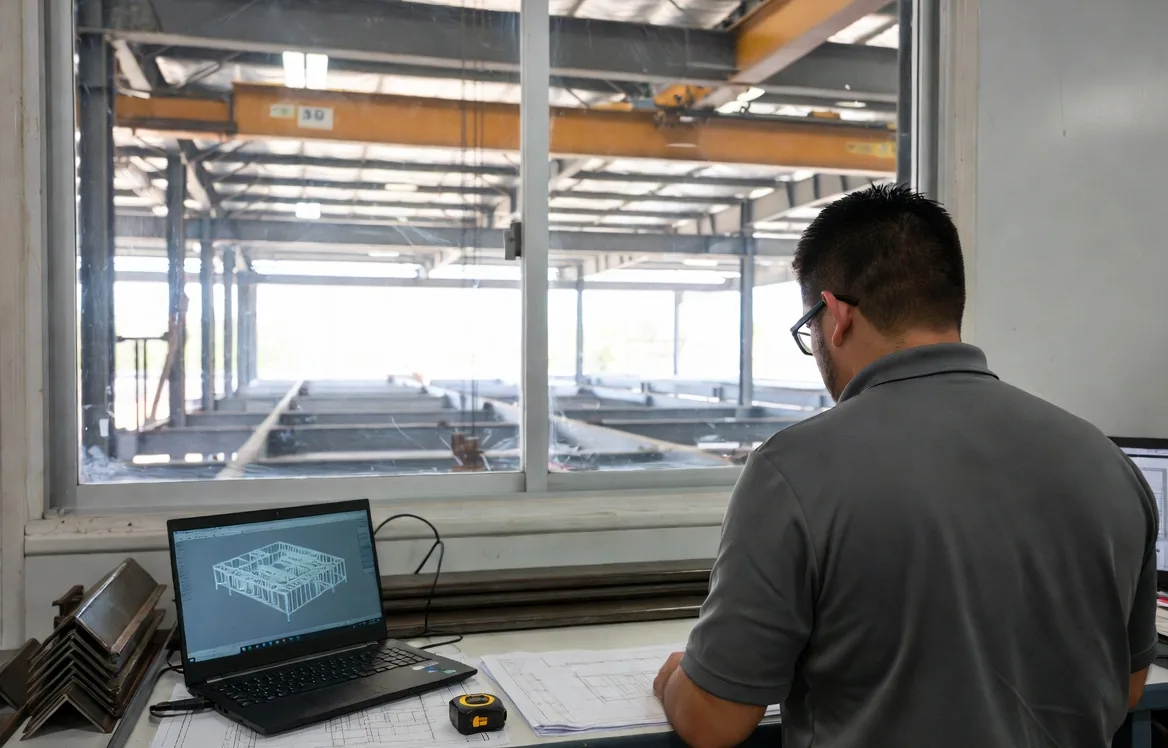
The main types of prefabricated buildings
| Type | Construction Method | Typical Use | Timeline |
|---|---|---|---|
| Prefab steel warehouse | Structural steel frames + cladding | Industrial, logistics, manufacturing | 8–20 weeks |
| Pre-engineered metal building (PEMB) | Optimized light-gauge frames | Commercial, light industrial | 6–14 weeks |
| Modular building | Volumetric pods assembled on site | Offices, classrooms, healthcare | 4–12 weeks |
| Light-gauge steel | Cold-formed steel framing | Residential, small commercial | 4–10 weeks |
| Container-based | Modified shipping containers | Temporary offices, pop-up retail | 2–6 weeks |
Prefabricated steel buildings for industry and commerce
For warehouses, factories, and distribution centers, prefabricated structural steel is the dominant construction system worldwide. The components — columns, beams, purlins, girts, and cladding — are manufactured in a factory, transported, and assembled on site using cranes and bolted connections.
- Clear spans from 30 ft to 400+ ft without interior columns
- Eave heights from 14 ft to 40+ ft
- Support for overhead cranes, mezzanines, and specialized systems
- Designed for specific wind, seismic, and load conditions
- Installation in 2–8 weeks once steel arrives on site
Learn more about prefabricated steel warehouses and how the construction process works.
Pre-engineered metal buildings (PEMB): how they differ
PEMBs use computer-optimized tapered sections to minimize steel weight. They're lighter and faster to produce than custom structural steel buildings but have limitations on span, height, and crane capacity. PEMBs are ideal for standard commercial and light industrial applications where extreme spans or heavy loads aren't required. Custom structural steel projects are typically modeled in Tekla Structures so connections, member preparation, and the bill of materials are driven from a single coordinated model.
| Factor | PEMB | Custom Structural Steel |
|---|---|---|
| Max clear span | ~200 ft | 400+ ft |
| Crane capacity | Light duty (≤10 ton) | Any capacity |
| Steel weight | Optimized (lighter) | Heavier but more versatile |
| Engineering | Software-driven templates | Project-specific |
| Cost | Lower for standard sizes | Higher but optimized for complex needs |
| Lead time | Shorter (standardized) | Longer (custom engineering) |
Prefab vs. modular: what is the difference?
"Prefab" is a broad term covering any factory-made building components. "Modular" specifically refers to volumetric units — complete rooms or pods — built in a factory and transported to the site where they're stacked, joined, and finished. All modular buildings are prefabricated, but not all prefabricated buildings are modular.
For industrial warehouses, modular construction is rarely used because the required clear spans and heights make volumetric modules impractical. Prefabricated steel frame systems are the standard.
Advantages and limitations of prefabricated construction
Advantages
- Speed: 40–60% faster than conventional construction
- Cost: lower labor costs and reduced material waste
- Quality: factory-controlled fabrication ensures consistency
- Safety: less on-site work reduces accident risk
- Sustainability: minimal waste, recyclable steel, efficient material use
- Predictability: fixed price and timeline from the start
Limitations
- Transport: large components require specialized trucking and route planning
- Foundation: still requires conventional site work and concrete foundations
- Customization: some prefab systems limit design flexibility (though custom steel does not)
- Perception: some buyers assume 'prefab' means low quality (structural steel buildings are engineered to the same codes as any building)
How to evaluate a prefab building supplier
- Engineering team: in-house structural engineers, not outsourced
- Fabrication facility: own shop with CNC equipment and welding certifications
- Installation capability: erection crews and lifting equipment
- References: completed projects similar to yours in size and use
- Financial stability: capacity to handle your project without delays
- Communication: clear timeline, pricing, and project management process
FAQs
What is a prefabricated building?
A structure manufactured in components or modules at a factory, then transported and assembled at the final site.
What is the difference between prefab and modular?
Prefab covers any factory-made components. Modular specifically means complete room units assembled on site. All modular is prefab, but not all prefab is modular.
What is a PEMB?
A pre-engineered metal building — a steel building system designed with standardized software to optimize material use, with some limitations on span and load capacity versus custom structural steel.
Need a Prefabricated Steel Building?
SQ Tech designs and builds custom prefabricated steel warehouses from our facility in Hermosillo, Mexico. Engineering, fabrication, and installation — all in-house.