Hurricane-Rated Prefab Steel Warehouses: Wind Load Standards in Mexico and the US
Prefabricated steel warehouses can be engineered to withstand basic wind speeds from 90 km/h (56 mph) in low-risk inland zones up to 250 km/h (155 mph) in hurricane-prone coastal regions. In Mexico, design wind speeds are set by NTCV (Normas Técnicas Complementarias para Diseño por Viento); in the United States, by ASCE 7. SQ Tech engineers every building to its specific site location and includes a stamped structural calculation report. For coastal projects in Baja California Sur, Sinaloa, the Gulf of Mexico, Florida, or the Texas Gulf Coast, hurricane-rated configurations are standard practice — not an upgrade.
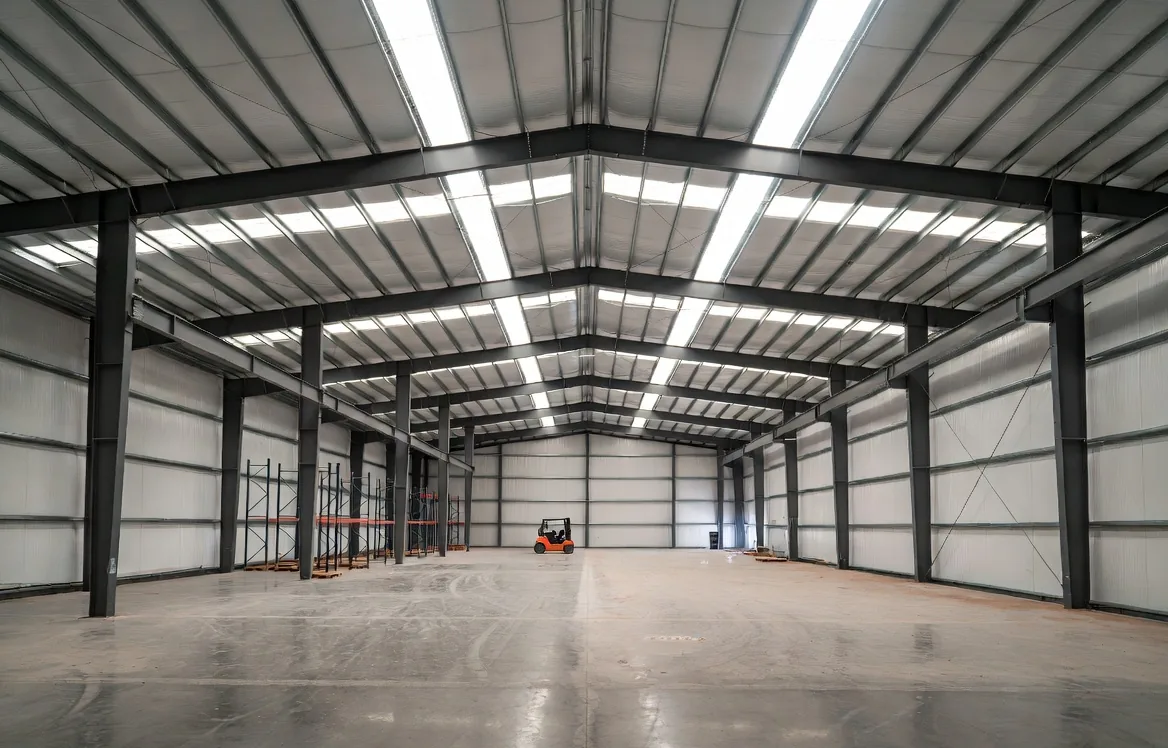
Why wind rating matters more than the price tag
A prefab steel warehouse that fails in a hurricane is not a savings — it's a total loss plus liability. Every year, building owners in Pacific Mexico, the Gulf of Mexico, and the southeastern US discover too late that the structure they bought was engineered for inland wind loads, not coastal ones. The price difference between an inland-rated building and a hurricane-rated one is typically 8–18%, depending on size and severity. The price difference between a hurricane-rated building and a destroyed one is the cost of the entire facility plus interrupted operations.
Before signing any quote for a prefab warehouse in a coastal or high-wind zone, three documents should be in hand: the basic wind speed used for design, the applicable code and edition (NTCV-2017, ASCE 7-22, or equivalent), and the structural calculation report.
Wind load standards: Mexico (NTCV) vs United States (ASCE 7)
Both Mexico and the United States use modern, mathematically rigorous wind load codes that account for terrain, building geometry, exposure category, and risk classification. The two codes give similar results for the same site, though they express them differently.
| Aspect | Mexico (NTCV) | United States (ASCE 7) |
|---|---|---|
| Governing document | NTC para Diseño por Viento (NTCV) | ASCE 7 (current edition: ASCE 7-22) |
| Wind speed unit | km/h (regional design speed) | mph (basic wind speed at 33 ft / 10 m) |
| Risk classification | Group A, B, or C | Risk Category I, II, III, IV |
| Coastal coefficient | Topographic and exposure factors | Kzt, Kd, exposure category C/D |
| Stamped by | DRO / Perito Estructural (state-licensed) | Licensed Professional Engineer (state-by-state) |
| Wind region map | 8 regional zones across Mexico | Wind speed contours per region |
Wind speed by region in Mexico
Mexico's NTCV divides the country into wind regions with different design wind velocities. Coastal areas exposed to Pacific or Atlantic hurricanes carry the highest design speeds and require the most robust structural detailing.
| Region | Examples | Design Wind Speed (km/h) | Hurricane Risk |
|---|---|---|---|
| Pacific Hurricane Coast | Baja California Sur, Sinaloa, Nayarit, Colima, Guerrero | 180–220 | High (May–Nov) |
| Yucatán & Gulf of Mexico | Quintana Roo, Yucatán, Tabasco, Veracruz | 200–250 | Very High (Jun–Nov) |
| Northern Border / Inland | Sonora (Hermosillo), Chihuahua, Coahuila | 120–160 | Low–Moderate |
| Central Plateau | México City, Puebla, Querétaro, Guanajuato | 100–130 | Low |
| Pacific Inland (Sonora coast) | Guaymas, Empalme, Hermosillo coastal zone | 150–180 | Moderate |
Wind speed by region in the US (ASCE 7)
| Region | Examples | Basic Wind Speed (mph) | Hurricane Risk |
|---|---|---|---|
| Florida Gulf & Atlantic Coast | Miami, Tampa, Naples, Jacksonville | 150–180 | Very High |
| Texas Gulf Coast | Houston, Corpus Christi, Brownsville | 130–160 | High |
| Louisiana, Mississippi, Alabama Coast | New Orleans, Mobile, Gulfport | 140–170 | Very High |
| Carolinas Coast | Wilmington, Charleston, Savannah | 130–160 | High |
| Inland South / Southwest | Atlanta, Dallas, Phoenix, San Antonio | 105–120 | Low–Moderate |
| California (non-coastal) | Los Angeles, San Diego, Sacramento | 95–110 | Low (seismic-driven design) |
What changes structurally for hurricane-rated buildings
A hurricane-rated prefab warehouse is not a different product — it is the same kit engineered with heavier members, tighter spacing, and reinforced connections. The visible building looks similar; the engineering and bill of materials differ.
- Primary frames (columns and rafters): heavier I-sections or built-up plate sections to handle higher base shear and uplift.
- Wind bracing: increased rod or angle bracing in end bays and longitudinal walls; sometimes portal bracing instead of X-bracing.
- Purlin and girt spacing: reduced from 5 ft to 4 ft on center to keep cladding spans within wind-pressure limits.
- Anchor bolts: larger diameter (1" to 1-1/4") and deeper embedment in the concrete foundation.
- Roof and wall cladding: heavier gauge (24 ga becomes 22 ga in extreme zones) with closer fastener pacing.
- Door reinforcement: roll-up doors and personnel doors specified for the same wind pressure; sub-framing added at openings.
- Connection design: bolted flange-plate connections with higher bolt counts; welds reviewed for cyclic-load fatigue.
Cost impact of upgrading to hurricane-rated specs
For most buildings, upgrading from inland (~120 km/h NTCV / ~110 mph ASCE 7) to hurricane-rated (~200 km/h NTCV / ~150 mph ASCE 7) adds 8–18% to the structural package cost. The exact delta depends on building geometry, eave height, and door/opening density.
| Building Size | Inland-Rated (USD) | Hurricane-Rated (USD) | Premium |
|---|---|---|---|
| 30 × 40 ft (1,200 sq ft) | $15,000–$22,000 | $17,000–$26,000 | +10–15% |
| 50 × 100 ft (5,000 sq ft) | $45,000–$75,000 | $50,000–$88,000 | +10–17% |
| 100 × 200 ft (20,000 sq ft) | $150,000–$300,000 | $165,000–$345,000 | +10–18% |
| 200 × 400 ft (80,000 sq ft) | $650,000–$1,300,000 | $715,000–$1,500,000 | +10–18% |
How SQ Tech engineers buildings for high-wind and hurricane zones
SQ Tech engineers every building to its destination, not to a generic standard. For projects in Baja California Sur, the Gulf of Mexico, US Gulf states, or the Caribbean, the workflow is:
- Confirm site location, geocoded to the nearest weather station and NTCV/ASCE 7 wind zone.
- Determine the design wind speed for the building's risk category (typically Category B / Risk II for industrial).
- Apply terrain and exposure modifiers (Exposure C for open country, D for coastal within 1 mile of water).
- Run the structural calculation in software (RAM, STAAD, or equivalent) with combined wind, seismic, dead, and live loads.
- Detail bracing, anchors, and connections per the controlling load case.
- Issue a stamped memoria de cálculo (Mexico) or coordinate with a US-licensed PE for stateside stamping.
- Specify cladding gauge, fastener spacing, and door reinforcement to match the wind-pressure design.
Documentation you should request before signing
For any prefab warehouse purchase in a wind-exposed zone, request the following documents before paying the deposit. Reputable manufacturers provide them as part of the standard quote package. For retrofits or expansions of existing structures in coastal zones, a scan to BIM survey of the existing building captures as-built geometry so the engineer can validate connections and anchorage against the upgraded wind loads:
- Design wind speed used in the calculation (km/h for Mexico, mph for US).
- Applicable code and edition (e.g., NTCV-2017 or ASCE 7-22).
- Risk category and exposure category assumed.
- Structural calculation report (memoria de cálculo) signed by a licensed engineer.
- Anchor bolt schedule and foundation reaction loads (so your local foundation engineer can validate the slab).
- Cladding fastener pattern at corners and edges (where wind pressure peaks).
FAQs
Are SQ Tech prefab steel warehouses hurricane-rated?
Yes. Every building is engineered to its specific site wind speed per NMX/NTCV in Mexico or ASCE 7 in the US. Hurricane-rated configurations are standard practice for coastal projects, not an upgrade.
What wind speed does my warehouse need to be rated for?
It depends on geography and building category. In Mexico, NTCV regional speeds range from 90 to 250 km/h. In the US, ASCE 7 basic wind speeds range from 95 to 180 mph. A licensed structural engineer determines the exact value for your site.
What wind standard applies in Baja California Sur?
Baja California Sur is in NTCV's Pacific hurricane region. Design wind speeds are typically 180–200 km/h (112–124 mph) for standard industrial buildings, with higher values for essential facilities.
Does SQ Tech provide a structural calculation report?
Yes. Every quoted building includes a stamped structural calculation report. For US projects, calculations can be coordinated with a US-licensed PE for stamping in the destination state.
Can a prefab steel warehouse survive a Category 4 or 5 hurricane?
Yes, when designed for that load case. Steel buildings rated for 180+ mph can survive Category 4 hurricanes. Survivability also depends on cladding attachment, door reinforcement, and foundation anchoring — all detailed in the structural calculation.
Learn more about the steel warehouse construction process or the cost of steel warehouses by size.
Get a Hurricane-Rated Quote for Your Site
Tell us your building size, location, and intended use. We'll engineer to your site's actual wind zone and include a stamped structural calculation report.